The Psychology of Mouse Toy
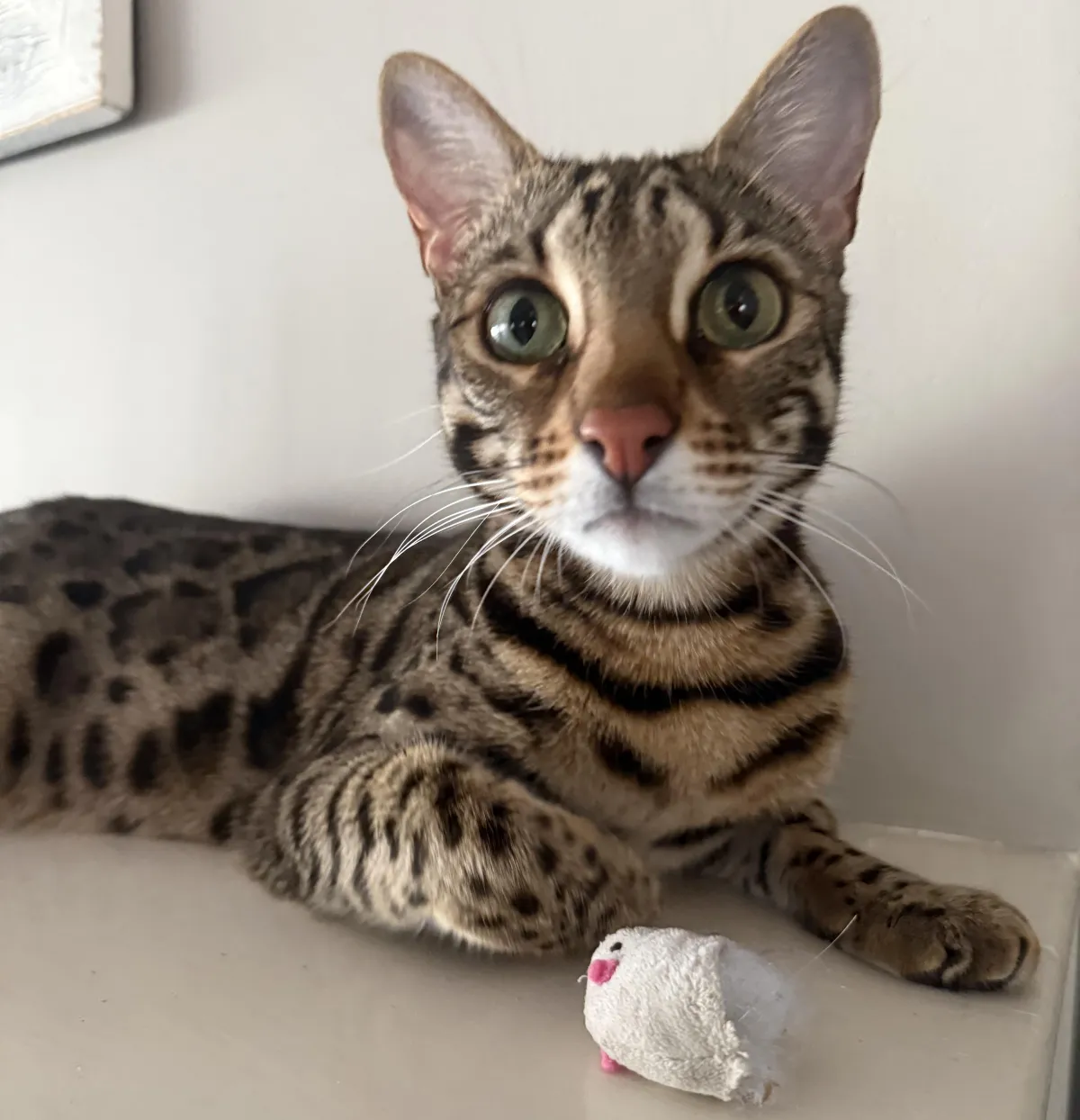
Mouse Toy is not just a stuffed mouse.
He doesn’t have a face. Or a tail. Or a backend. Or limbs. By any traditional standard, he’s incomplete. And yet, he is whole—because Mouse Toy exists in relationship.
Mouse Toy has been Flounder’s best friend since the day she met me. Long before buttons. Long before words. Long before any of us could have imagined what would unfold.
What follows isn’t a claim about magic or mysticism. It’s something far more interesting: a real-time glimpse into cognition, emotional processing, and symbolic communication in a non-human animal.
When Objects Become Individuals
In human psychology, we call it object personification—the process by which an individual attributes thoughts, feelings, and agency to an inanimate object. It’s common in childhood development, particularly when language is still emerging. A stuffed animal becomes a “someone,” not a “something.”
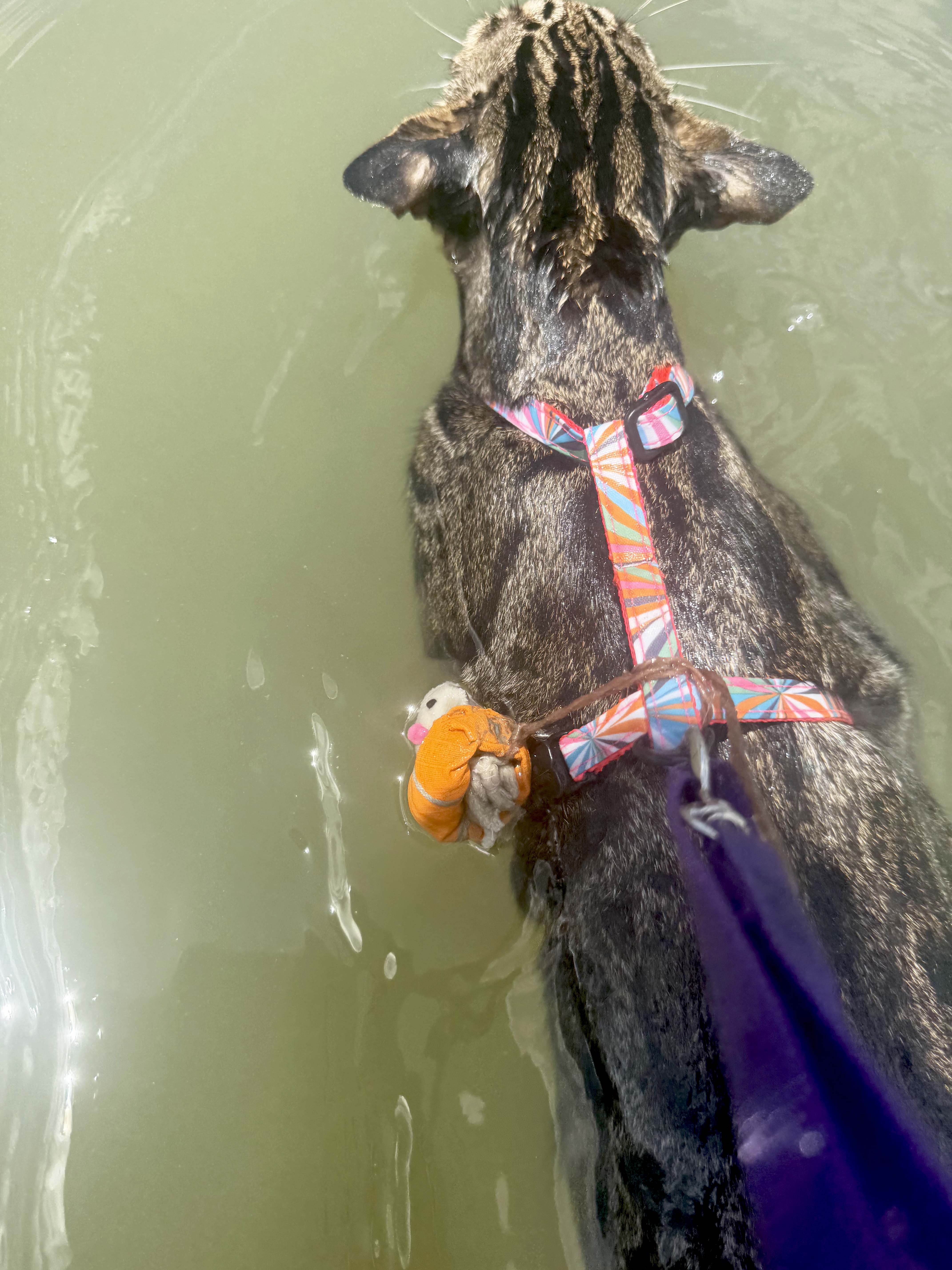
What’s remarkable here isn’t that Flounder personified Mouse Toy. It’s how she did it—and when it deepened. Mouse Toy already mattered a lot to her, but once she started using buttons to talk, things got interesting. Mouse Toy got hurt. He needed medicine. He needed to be fed. He went on adventures—paddle boarding, swimming at the beach—woven into Flounder’s daily life as a constant companion.
Language Changed the Relationship
After Flounder began using buttons, she started talking about Mouse Toy rather than merely acting with him. Mouse Toy had an ouch. Mouse Toy needed food. Mouse Toy had preferences.
Then, around Flounder’s birthday in August 2025, Mouse Toy was placed inside a hamster ball to preserve what was left of him. A practical decision.
But cognitively? It changed everything. Once Mouse Toy was in the ball, he began to “talk.” Flounder would roll Mouse Toy’s ball across the buttons to make him speak. I gave Flounder a treat ball of the same size and weight to roll around the buttons. She does not press buttons with it. She is careful not to. She only presses buttons with Mouse Toy’s ball. This matters for one crucial reason:
That distinction requires intention, discrimination, and symbolic understanding. Flounder wasn’t randomly activating buttons. She was helping Mouse Toy talk.

Photo credit: Anna Davis
Proxy Speech and Emotional Safety
In psychology, there’s a concept called proxy expression—using another voice or character to safely express thoughts or emotions that feel too big, too confusing, or too vulnerable to own directly. Children do this all the time. “So-and-so is scared,” instead of “I’m scared.” “My doll is sad,” instead of “I’m sad.”
Mouse Toy began developing opinions and desires that were separate from Flounder’s. He wanted to go paddle boarding. Flounder told him it was too cold. He expressed concern about a guest in FlounderLand. Notably, these concerns closely mirrored things Flounder herself might reasonably feel—but framed safely through Mouse Toy’s voice. Mouse Toy became a container. A messenger. A way to say the unsayable.
Mouse Toy and Anticipatory Grief
Before Flounder’s brother, Fiki, passed, Mouse Toy’s behavior changed. He became needy. He was afraid to skateboard. He needed extra reassurance. This timing matters. In humans, anticipatory grief often shows up as anxiety, clinging, or fear before a loss fully occurs. The nervous system knows something is wrong long before the conscious mind can name it.
Could Mouse Toy’s fear have been Flounder’s fear? A safe externalization of uncertainty and dread? The pattern suggests yes.
After Fiki passed, something else shifted. Mouse Toy, who had always eaten Fiki's food, a food that Flounder has never liked, could no longer eat Fiki’s food. He needed a different food because Fiki’s food now triggered something in Flounder. Instead of Flounder saying she couldn’t tolerate it, Mouse Toy carried that boundary.
And then: Mouse Toy was sad. Flounder never described herself as sad.
When Grief Speaks Sideways
Animals, like humans, don’t always experience grief in neat emotional labels. Sometimes grief shows up as avoidance. Sometimes as ritual. Sometimes as displacement. And sometimes, it speaks through a friend. Mouse Toy became a grief proxy.
He felt the sadness. He carried the loss. He held the emotions Flounder wasn’t yet ready—or able—to claim directly. This isn’t avoidance. It’s adaptation. It’s emotional intelligence expressed in a different language through her bestie.
What Mouse Toy Teaches Us
Mouse Toy challenges deeply held assumptions about animals and cognition:
That symbolic thinking is uniquely human
That grief must be verbally acknowledged to be real
That imagination is separate from intelligence
What we see instead is a complex emotional system using tools available to it:
Role differentiation
Proxy expression
Mouse Toy isn’t “just” a toy. He’s a bridge. Between emotion and language. Between fear and safety. Between loss and expression. And perhaps most importantly, between what Flounder feels—and what she knows how to say.
Final Thought
If we dismiss Mouse Toy as pretend, we miss the point entirely. Mouse Toy is not evidence of fantasy. He is evidence of meaning-making. And meaning-making—across species—is one of the most profound cognitive abilities there is.
Sometimes, the deepest truths don’t come from saying “I feel this.” Sometimes they come from saying:“Mouse Toy does.”

